Wonky Dongki Font for Web Design
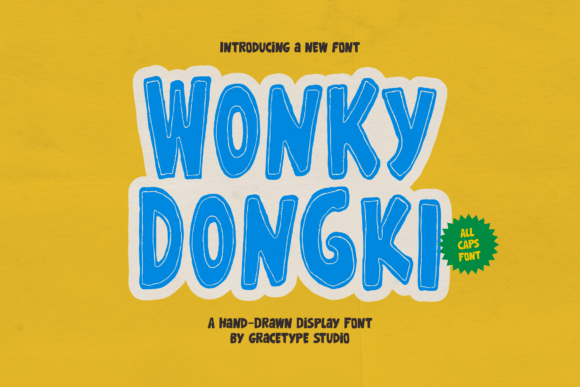
Testing Wonky Dongki in a hero section of a boutique online store was the first step in discovering its potential. As a web designer, I was drawn to its hand-drawn aesthetic and playful energy. The font’s uneven, wobbly letterforms add a unique character that stands out in digital layouts. It’s perfect for creating visual interest without overwhelming the design.
Wonky Dongki for Creative Portfolio Websites
When designing a creative portfolio site, I chose Wonky Dongki for the main headline. Its quirky personality matched the brand’s artistic vibe. The font’s all-caps style made it ideal for large text elements, especially when paired with bold images or background overlays. However, I noticed that smaller text sizes reduced readability, so I limited its use to headers and call-to-action buttons.
The font’s outlined style added a charming touch, but I had to be careful not to overuse it. In one instance, I used it for a project title, and it worked well against a dark background. For body copy, I switched to a clean sans serif font to maintain balance and ensure accessibility across different screen sizes.
Wonky Dongki for Online Store Banners
For an online store selling handmade goods, I experimented with Wonky Dongki on product banners. The font’s playful nature complemented the brand’s artisanal feel. I used it for short phrases like “Handmade with Love” and “Limited Edition,” which caught attention without distracting from the product images.
On mobile screens, the font remained legible at larger sizes, but I avoided using it for small text on buttons. Instead, I reserved it for headings and decorative accents. The font’s irregular shapes sometimes caused spacing issues, so I adjusted line heights and letter spacing to improve overall layout harmony.
Wonky Dongki for Coaching Website Headlines
A coaching website needed a strong, engaging headline for its homepage. I tested Wonky Dongki on the main title and found it worked well for short, impactful messages. Its uneven letterforms gave the text a dynamic feel, which aligned with the brand’s energetic tone.
I paired it with a simple serif font for subheadings, which created a balanced contrast. This pairing helped guide the user’s eye through the page while maintaining a professional look. The font also worked well as a logo element, adding a personal touch to the brand’s identity.
Wonky Dongki for Digital Ads and Social Media Graphics
In a social media campaign, I used Wonky Dongki for ad headlines and graphic overlays. Its hand-drawn style added a fresh, modern look that stood out in a crowded feed. I found that it worked best when used sparingly, as too much text in the font could feel chaotic.
For image overlays, I kept the text short and placed it near the top or bottom of the image. This approach maintained clarity while leveraging the font’s visual appeal. I also checked how the font looked on both light and dark backgrounds, ensuring it remained readable in different contexts.
Wonky Dongki for Course Sales Pages and Landing Pages
On a course sales page, I used Wonky Dongki for the main headline and key benefits section. The font’s quirky character helped break up the page and draw attention to important information. However, I made sure to keep the rest of the text in a more traditional typeface to avoid overwhelming the reader.
For CTA buttons, I used a bolder version of the font, which made the buttons stand out without being too flashy. I also tested the font on different screen sizes and found that it scaled well, though I adjusted the size for smaller devices to ensure optimal readability.
Wonky Dongki for Blog Headers and Editorial Design
When redesigning a blog, I incorporated Wonky Dongki into the header sections. Its playful energy matched the blog’s creative tone, and it worked well with bold color schemes. I used it for post titles and featured sections, which added a sense of excitement to the content.
However, I realized that the font wasn’t ideal for long-form articles. For body text, I switched to a more readable sans serif font. I also considered font pairing, using a subtle script font for pull quotes to add variety without conflicting with the main headline.
Wonky Dongki for Brand Identity and Logo Design
Wonky Dongki proved to be a great choice for a brand’s logo. Its hand-drawn style gave the logo a personal, authentic feel that resonated with the target audience. I used it for the primary logo and secondary branding elements, ensuring consistency across all platforms.
When working on a brand kit, I included multiple variations of the font, such as alternate characters and custom weights. This allowed for flexibility in different design applications. I also checked the font’s multilingual support to ensure it worked well with other languages used in the brand’s messaging.
Wonky Dongki for Responsive Layouts and Fast-Loading Designs
As a web designer, I always consider performance when choosing a font. Wonky Dongki’s file size was manageable, and it loaded quickly on most devices. I used it for key visual elements, avoiding excessive use to maintain fast load times.
For responsive layouts, I tested the font on different screen sizes and adjusted the font size accordingly. On mobile devices, I increased the size slightly to ensure readability, while on desktops, I kept it consistent with the overall design. This approach helped maintain a cohesive user experience across all platforms.