Happy Cookies Font Review
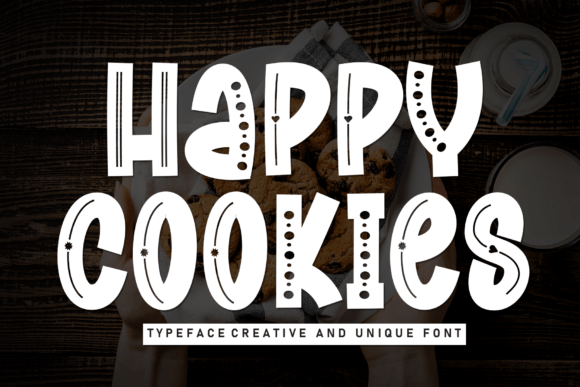
Choosing the right font for a project can feel like picking the perfect accessory for an outfit—everything needs to match, and the wrong choice can throw off the whole look. When I was redesigning a lifestyle blog header, I found myself drawn to Happy Cookies, a uniquely creative and chunky display font bursting with personality. Its playful, uneven baseline and heavy, rounded forms are decorated with quirky cutout elements and cute dotted details that bring a sense of whimsy to any layout.
Happy Cookies for Lifestyle Blog Headers and Editorial Branding
Happy Cookies is ideal for projects where a bold, expressive voice is needed. As a display font, it naturally draws attention without overpowering the surrounding content. For a lifestyle blog, using Happy Cookies in headers or mastheads adds a distinct visual identity that feels both modern and approachable. The font’s uneven baseline gives it a handcrafted, organic feel, which pairs well with editorial layouts that aim to feel personal and authentic.
The font’s heavy, rounded forms make it easy to read at larger sizes, while the cutout and dotted elements add subtle texture that prevents it from feeling too rigid. This makes it a great choice for branding materials, such as social media graphics, newsletter headers, or even packaging design. It’s not just a font—it’s a style statement.
Happy Cookies in Recipe Ebooks and Digital Magazines
When I tested Happy Cookies in a recipe ebook, it became clear how well it supports editorial mood and content structure. The font’s lively character works beautifully for chapter titles, section headers, and pull quotes, especially when paired with a clean, readable serif or sans serif font for body text. The contrast between the bold, playful display font and the more subdued body copy creates a natural visual hierarchy that guides the reader through the content.
In digital magazines, Happy Cookies can be used to highlight key sections, introduce new features, or create a sense of rhythm across pages. Its unique shape and spacing allow it to stand out without clashing with other design elements. However, it’s best reserved for short, impactful text rather than long paragraphs, as its expressive nature may reduce readability in dense blocks of text.
Happy Cookies for Wedding Guides and Creative Workbooks
For a wedding guide, Happy Cookies brings a sense of celebration and joy to the design. Whether used in a title, a cover graphic, or a section heading, the font adds a touch of fun that aligns with the theme of the publication. Its quirky cutouts and dotted accents give it a handmade quality that feels warm and inviting, making it perfect for a guide that aims to inspire and inform.
In creative workbooks, such as printable planners or coaching guides, Happy Cookies can be used to emphasize key instructions, motivational quotes, or activity titles. The font’s personality helps reinforce the tone of the workbook, whether it’s about self-care, productivity, or mindfulness. Just like in a recipe ebook, pairing it with a simpler font ensures that the message remains clear and accessible.
Happy Cookies in Newsletter Graphics and Social Media Posts
When designing a newsletter, I found that Happy Cookies added a fresh, energetic vibe to the layout. It worked particularly well for eye-catching headlines, call-out boxes, and featured sections. The font’s irregular baseline and decorative elements make it visually engaging, which is essential for capturing attention in a crowded inbox.
On social media, Happy Cookies can be used to create striking visuals that reflect a brand’s personality. Whether it’s a promotional post, a product announcement, or a seasonal message, the font’s playful aesthetic helps convey emotion and creativity. However, it’s important to test it on different platforms and screen sizes to ensure it remains legible and effective across all formats.
Happy Cookies for Printables and Digital Downloads
As a font designed for display use, Happy Cookies shines in printables and digital downloads where visual impact is key. For printable planners, worksheets, or templates, it adds a distinctive flair that sets the design apart. The font’s weight and spacing make it suitable for large-scale printing, while its unique details prevent it from looking generic or overused.
When using Happy Cookies in commercial projects, it’s important to check the licensing terms and file formats available. Some fonts come with limited styles or weights, so ensuring compatibility with your design software and output requirements is crucial. Additionally, considering multilingual support is a good idea if the project will be used in multiple regions or languages.