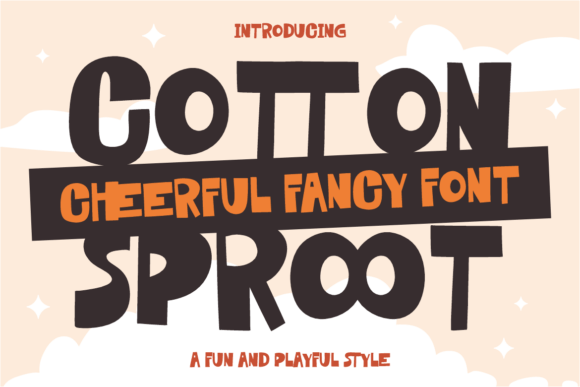
Cotton Sproot Font for Playful Branding
When I first opened a blank brand board for a small café project, the challenge was clear: create a visual identity that felt warm, inviting, and full of personality. The client wanted something that stood out but still felt approachable. That’s when I turned to Cotton Sproot, a display font that brings energy, joy, and childlike wonder to any design. Its thick, bubbly strokes and slightly wobbly shapes create a spontaneous charm—perfect for a brand that wants to feel fun yet professional.
Cotton Sproot for Logo Design and Brand Identity
Testing Cotton Sproot on a logo draft was like finding the missing piece of a puzzle. The font’s playful curves and uneven edges gave the logo a sense of movement, as if it were smiling back at me. It worked especially well for a café name that had a whimsical twist. When paired with a simple sans serif for the tagline, it created a balanced contrast without losing the font’s unique character. This combination made the logo feel both modern and nostalgic, which was exactly what the client was looking for.
One thing I noticed early on was how Cotton Sproot handled different sizes. On a business card, it stayed legible and charming, while on a large shop sign, it added a dynamic flair that caught the eye. The key was using it as a headline font rather than body text. It didn’t work well for long paragraphs, but as a display font, it brought a lot of personality to the brand’s visual language.
How Cotton Sproot Works in Packaging Design
When it came to packaging design, Cotton Sproot really shone. For a line of handmade soap boxes, the font added a touch of warmth and creativity. The thick strokes made the product names stand out, while the slightly wobbly shapes gave the packaging a handcrafted feel. It was perfect for a skincare brand that wanted to emphasize natural ingredients and a personal touch.
I also tested it on label stickers and product mockups. In those contexts, the font’s bubbly nature helped create a sense of playfulness that aligned with the brand’s tone. It wasn’t too loud, but it definitely had presence. The font’s versatility allowed it to work across different materials, from paper to plastic, without losing its charm.
Cotton Sproot for Social Media Graphics and Web Headers
For social media graphics, Cotton Sproot became a go-to choice for headlines and promotional banners. Its boldness made it easy to read on screens, even when used in smaller sizes. I found that pairing it with a clean sans serif for captions created a nice visual rhythm. It was especially effective for Instagram posts and Facebook ads, where the font helped draw attention and convey the brand’s energetic vibe.
On website headers, Cotton Sproot added a sense of excitement and creativity. It worked well for hero sections and landing pages, where the goal was to make an immediate impression. The font’s personality helped set the tone for the entire site, making it feel more engaging and less corporate.
Practical Tips for Using Cotton Sproot in Design Projects
Before finalizing the font for a full brand system, I always recommend testing it in multiple contexts. Try it on different surfaces, in various sizes, and with different color schemes. Cotton Sproot is best used as a display font or accent typeface, not as a primary body font. It’s ideal for short-form text, such as headlines, logos, and labels.
When working with clients, I also suggest checking the font’s available styles and alternates. Some fonts have subtle variations that can add depth to a design. For example, Cotton Sproot might have different versions of certain letters that can be used to create a more organic look. This level of detail can make a big difference in the overall aesthetic.
Another thing to consider is multilingual support. If the brand operates in multiple regions, it’s important to ensure that the font works well in different languages. While Cotton Sproot may not have extensive multilingual support, it’s worth checking before committing to it for a global campaign.
Cotton Sproot for Editorial Design and Print Materials
In editorial design, Cotton Sproot added a fresh and lively feel to magazine covers and editorial spreads. It worked particularly well for articles about creativity, childhood, and community. The font’s playful nature complemented the content without overwhelming it. It was also great for pull quotes and subheadings, where a bit of visual interest was needed.
For printed marketing materials like flyers and posters, Cotton Sproot brought a sense of energy and spontaneity. It was perfect for event announcements, seasonal promotions, and local business listings. The font’s thick strokes made it easy to read from a distance, which was essential for outdoor signage and window displays.
Font Pairing Suggestions with Cotton Sproot
Pairing Cotton Sproot with other fonts can help balance its playful nature. A classic serif font like Georgia or Baskerville can add sophistication, while a modern sans serif like Helvetica or Montserrat can provide clarity. For a more creative look, pairing it with a script or handwritten font can add a personal touch, especially for invitations or greeting cards.
It’s also useful to experiment with different weights and styles. Using a lighter version of Cotton Sproot for secondary text or a bolder version for headlines can create a strong visual hierarchy. This flexibility makes it a valuable addition to any designer’s toolkit.